
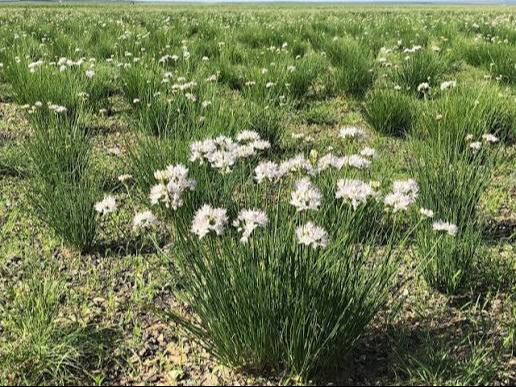
In the gobi region, a native wild onion called Taana that has fed herders for centuries is failing to bloom. A warning sign that desertification is accelerating faster than scientists once predicted.
In Nomgon soum, the most southern region in Mongolia, in Umnugovi Aimag summers now hasn't seen the growth of the Taana for a while now.
For generations, is known in Mongolia for the wild onions. The taana is a protein-rich and fat-rich plant that Mongolians have eaten for centuries and used to fatten their livestock. Now the blooming of the onions has become rare sight in its own native habitat, for the herders who live here, an unmistakable signal that something has gone badly wrong.

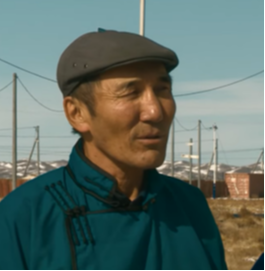
 "Taana can emerge with only a small amount of moisture," said Manlaijav P., a herder in Nomgon. "The reality that it now fails to bloom at all is a stark warning that aridity and desertification have begun to take a severe toll."
Drylands make up about 11 percent of the world's land surface, and in Mongolia they are represented by the Gobi, it is not a just a desert, it is large plain that it used inhabit variety of vegetations. Regardless, it still a dryland, but despite that Gobi supports remarkable biodiversity — including species that are rare globally and some threatened with extinction. But the balance that sustains them is fragile, and in the Gobi it is visibly slipping.
Gobi soils are especially vulnerable. Their fertile topsoil is thin and soft, easily disturbed and quick to degrade. Across Mongolia, more than 20 plant species have already been recorded as becoming rare or extinct under human pressure, and the list grows each year.
Local officials say the weather itself has turned erratic. "We see clouds gather and hope for rain, but then the wind picks up and sweeps them away," said Bayarsaikhan B., head of the Governor's Office in Nomgon. "Even at the height of summer it feels like spring — constant dust storms, sudden drops in temperature. Over the last two years especially, severe winds, tornadoes, and both dust and snowstorms have become more frequent. Sometimes disaster strikes with no warning at all. The soil has completely dried out and turned to dust."
The consequences are compounding. As pastures thin, herders crowd onto the few patches of good rangeland that remain, pushing those areas beyond their carrying capacity until they, too, degrade.

"The grasses that livestock feed on keep dwindling, while weeds they won't eat take over," said Dashzegve O., a well-known racehorse trainer in the aimag. "The wind blows almost all year round, and now it blows hardest right during the peak growing season — stripping the soil of moisture and carrying off the nutrient-rich topsoil. When there's not a single blade of grass left, everyone crowds into the last good pastures, and those collapse under the weight."
Scientists have warned for decades that as ecosystems lose their balance, natural disasters and infectious diseases will rise. If degradation continues at its current pace, some researchers now caution, the threat of widespread global desertification could arrive as much as half a century sooner than earlier projections suggested.
For the Gobi's herders, the taana that no longer blooms is a marker of how quickly that future is approaching. But it is not yet inevitable. There are still time, residents and specialists say to act — planting green belts to break the wind and hold back the shifting sand, building ponds and small reservoirs, fencing degraded land for recovery, and managing rangelands sustainably.
It is one of the many reasons Mongolia is hosting COP17, the UN desertification conference, this year. The gathering, officials hope, will help lay the groundwork for the concrete steps needed to keep the Gobi from becoming, one dry summer at a time, a Gobi without taana.
By Tseveenkherlen Tseveendolgor
For Mongolian version please visit
ТААНАГҮЙ ГОВЬ




Сэтгэгдэл байхгүй байна